Kill not the goose that lays the golden eggs

beautiful thoughts

Kill not the goose that lays the golden eggs.

An old proverb

White-fronted Goose: Have you seen this bird?

White-fronted Goose: Have you seen this bird?

credit +
large image

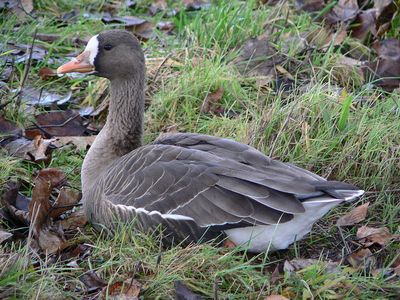
Greater White-fronted Goose

The Greater White-fronted Goose (Anser albifrons) is a goose species closely related to the smaller Lesser White-fronted Goose. In Europe it has been known as simply “White-fronted Goose”.

The Greater White-fronted Goose is divided into five subspecies. All these races are similar in plumage, differing only in size.

Identification Tips:
• Length: 20 inches Wingspan: 60 inches
• Sexes similar
• Medium-sized long-necked goose

Adult
• Mostly brown plumage
• White patch at base of pink or orange bill
• Irregular black spots on belly
• White line separating belly from wings
• White under and uppertail coverts, dark tail
• Orange legs and feet

Similar species:
The White-fronted Goose is the only goose with irregular black spots on the belly and a white patch at the base of the bill. Immatures lack these marks and could be confused with immature blue phase Snow Geese but they have yellowish rather than dark bills, legs, and feet. Escaped domesticated geese can be similar.

The very distinct Greenland White-fronted Goose breeds in western Greenland. It is much darker overall than the other races. It winters in Ireland and western Scotland.


Kill not the goose that lays the golden eggs.

Variation:

Don’t kill the goose with the golden egg.


Bird Quotation Popularity Poll

(4 answers max)

  • Quote: Kill not the goose that lays the golden eggs
    View Results

    Loading ... Loading ...

Add any comments below and/or indicate if you spotted this bird.


Kill not the goose that lays the golden eggs.

Bird Quote Notice
Please submit bird quotes, or your own bird quote. Enter the bird quote for others to enjoy by filling out the Submit form on the menu.


reports

Read More

Bad bird, bad egg

Bad bird, bad egg.

A German proverb

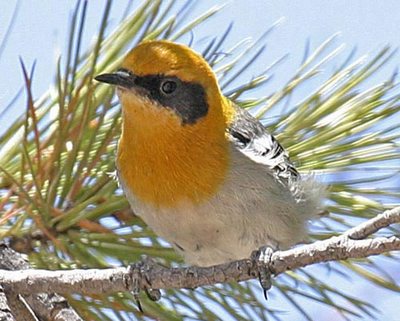
Olive Warbler

Have you seen this bird?

Olive Warbler

The Olive Warbler, Peucedramus taeniatus , is a small passerine bird. It is the only member of the genus Peucedramus and the family Peucedramidae.

This species breeds from southern Arizona and New Mexico, USA, south through Mexico to Nicaragua.

Identification Tips:
• Length: 4.5 inches
• Small, active, insect-eating bird
• Somewhat thin, pointed bill
• Whitish from lower breast to undertail coverts
• Grayish back and wings
• White wing bars
• Black legs
• United States range restricted to southeastern Arizona and southwestern New Mexico

Adult male:
• Black mask
• Head, throat, and upper breast dull orange

Female and immature:
• Dark cheek patch
• Yellow-orange to yellow wash on throat and breast
• Crown greenish

Similar species:
The male Olive Warbler is easily recognized by its black mask and orange head and breast. Females and immatures can be told from other species by their unstreaked underparts and dark cheek patch.

The Olive Warbler is a bird of mountains and highlands. It is the only bird family endemic to North America.


Bad bird, bad egg.


Bird Quote Popularity Poll

(4 answers max)

  • Quote: Bad bird, bad egg.

    View Results

    Loading ... Loading ...

Add any comments below and/or indicate if you spotted this bird.


Bad bird, bad egg.

Bird Quote Notice
If you have or know of a bird quote, bird quotes, or a bird quotation not yet on the site please submit it to Birdquote.com for others to enjoy.


Large view +
license

Read More

The egg shows the hen where to hatch


subliminal

The egg shows the hen where to hatch.

An African proverb

Have you seen this bird?

Have you seen this bird?

Chicken

The chicken (Gallus gallus, sometimes G. gallus domesticus) is a domesticated fowl. The hen is a female chicken, a rooster is a male chicken. The chick is a baby chicken.

The chicken is one of the most common and widespread domestic animals. With a population of more than 24 billion in 2003, there are more chickens in the world than any other bird. Humans keep chickens primarily as a source of food, consuming both their meat and their eggs.

Some genetic research has suggested that the bird likely descended from both Red and the Grey Junglefowl. Chickens are omnivores. In the wild, they often scratch at the soil to search for seeds, insects and even larger animals such as lizards or young mice.

Chickens in nature may live for five to eleven years depending on the breed.

Domestic chickens are not capable of long distance flight, although lighter birds are generally capable of flying for short distances, such as over fences or into trees (where they would naturally roost).


The egg shows the hen where to hatch.


Bird Quote Popularity Poll

(4 answers max)

  • Quote: The egg shows the hen where to hatch.

    View Results

    Loading ... Loading ...

Add any comments below and/or indicate if you spotted this bird.


The egg shows the hen where to hatch.

Bird Quote Notice
If you have or know of a bird quote, bird quotes, or a bird quotation not yet on the site please submit it to Birdquote.com for others to enjoy.


Large view +
Chick credit


Related Blogs

Read More

Don’t put all your eggs in one basket


subliminal

Don’t put all your eggs in one basket

A popular quote

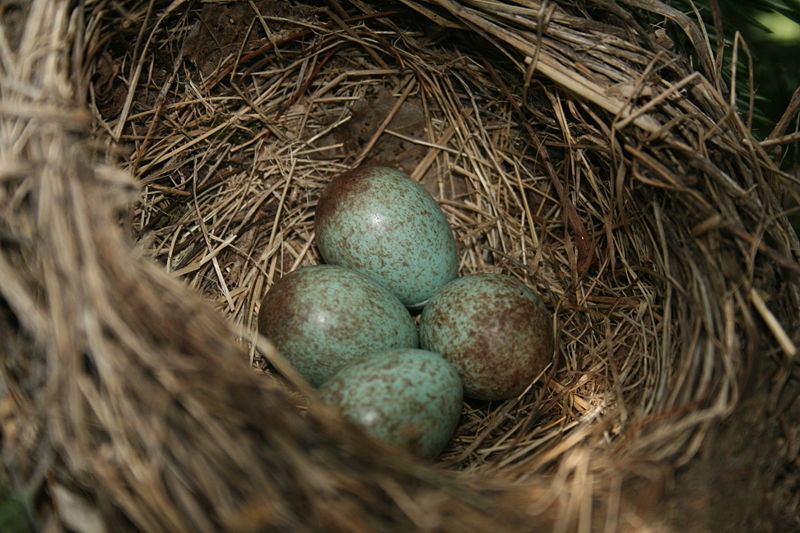
blackbird eggs

What type of eggs are these?

Don’t put all your eggs in one basket

Variations:
Don’t put all of your eggs in one basket

Bird Quote Popularity Poll

(4 answers max)

  • Quote: Don't put all your eggs in one basket

    View Results

    Loading ... Loading ...

Comment below how you use this popular quote and/or name the bird.


turbomembership

Read More

Bad Behavior has blocked 354 access attempts in the last 7 days.