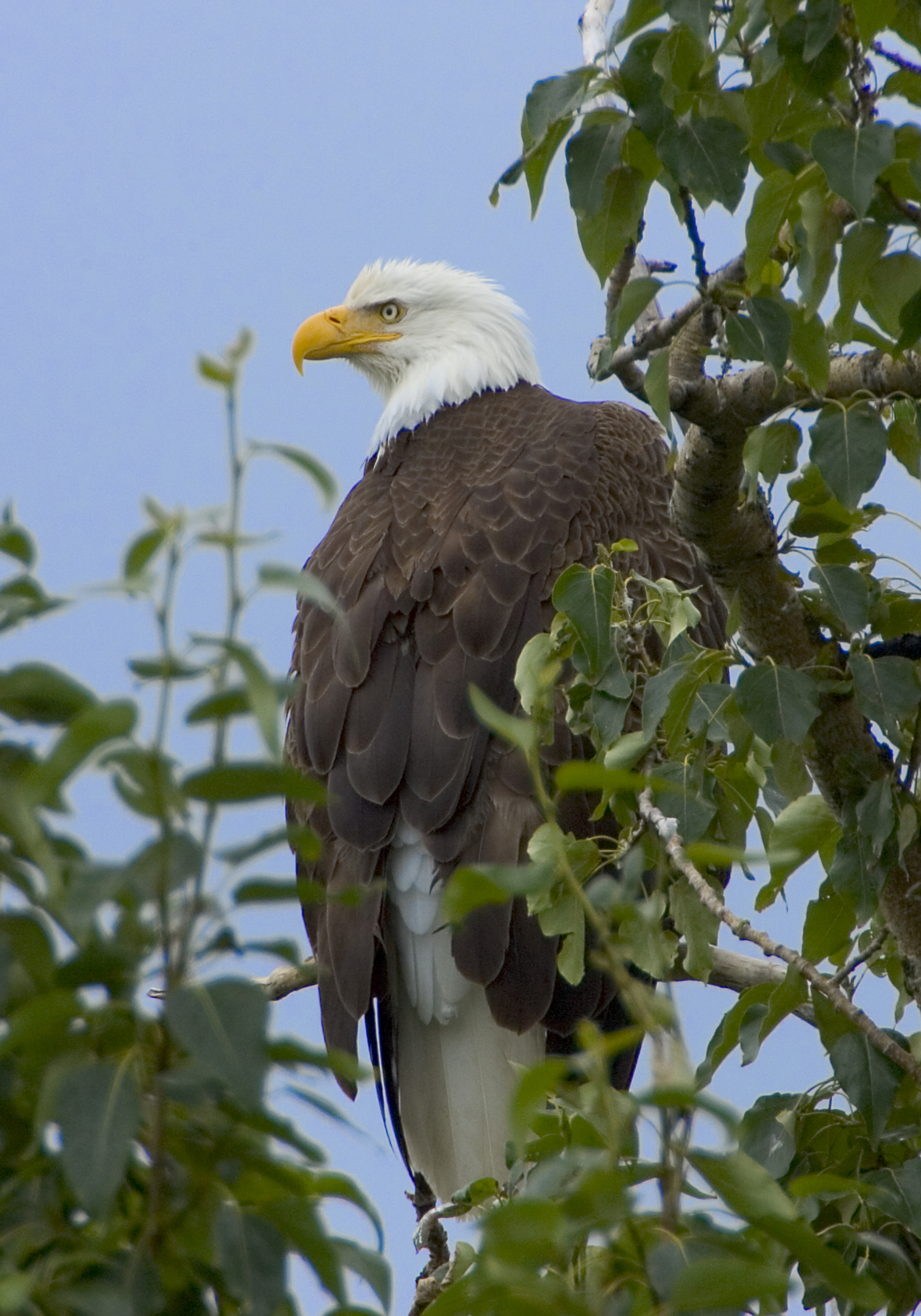
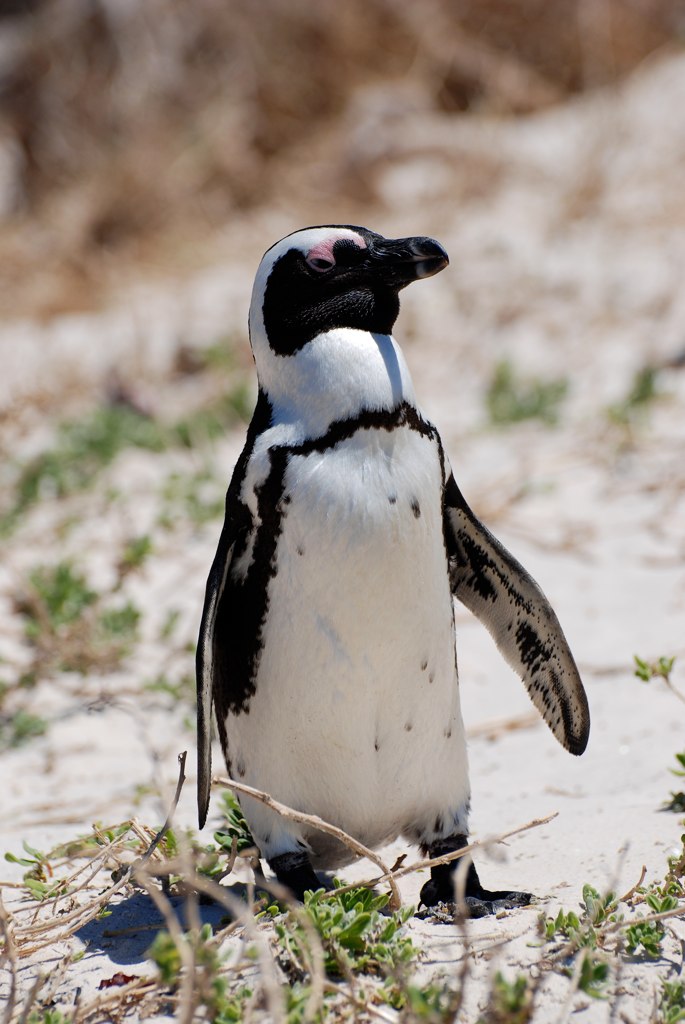
The seagull sees farthest who flies highest

beautiful thoughts


The seagull sees farthest who flies highest.

An old Proverb

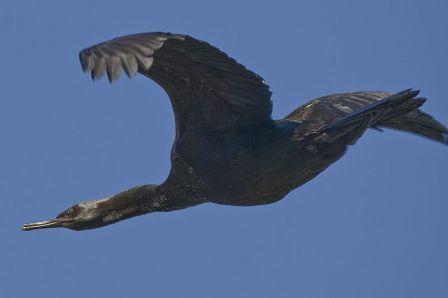
Pelagic Cormorant: Have you seen this bird?

Pelagic Cormorant: Have you seen this bird?

credit +
large image

Pelagic Cormorant

The Pelagic Cormorant (Phalacrocorax pelagicus), also known as Baird’s Cormorant, is a small member of the cormorant family Phalacrocoracidae.

It is also called Pelagic Shag occasionally. This seabird lives along the coasts of the northern Pacific; during winter it can also be found in the open ocean.

The Pelagic Cormorant inhabits the shores and the neritic zone of the North Pacific. Its North American range extends from Alaska to the Baja peninsula in Mexico.

Identification Tips:
• Length: 22 inches Wingspan: 40 inches
• Sexes similar
• Large, dark waterbird with a long, hooked bill and long tail
• Long, thin neck
• Gular region red
• Often perches with wings spread to dry them

Adult:
• Entirely dark plumage except for white flank patch
• Two crests on head
• Thin, white plumes on neck

Immature:
• Very dark plumage

Similar species:
Loons are similar on the water, but lack hooked bills. Most loons hold their bills level while swimming while cormorants hold theirs angled upwards.

It furthermore is found on the Aleutian and other Bering Strait islands, and from the Russian Far East Chukchi Peninsula via Sakhalin south to Kamchatka, and ultimately Ky?sh?.

The subarctic populations are migratory, while the birds from temperate and subtropical regions only disperse locally after breeding, but even so Asian birds may reach China or Korea.

On land, Pelagic Cormorants are rather clumsy and walk with the high-stepped waddling gait typical for all Sulae except darters; after landing they often scratch the ground, as is typical for cormorants. When they feel threatened, they will dart the bills at the intruder, and shake their heads and make a gargling noise.

The Pelagic Cormorant breeds on rocky shores and islands.

This bird forages by swimming to locate prey, then diving and going after it underwater, Typical prey are smallish, bottom-living non-schooling fishes, such as Ammodytes sand eels, sculpins (Cottidae), gunnels (Pholidae) and Sebastes rockfish. Apart from fish, small crustaceans – in particular shrimp – are also often eaten.


The seagull sees farthest who flies highest.

An old Proverb


Bird Quotation Popularity Poll

(4 answers max)

  • Quotation: The seagull sees farthest who flies highest
    View Results

    Loading ... Loading ...

Add any comments below and/or indicate if you spotted this bird.


The seagull sees farthest who flies highest.


pagely468x60_1


Related Blogs

Read More

Like the hummingbird sipping nectar from every flower, I fly joyfully…

beautiful thoughts


Like the hummingbird sipping nectar from every flower, I fly joyfully through my days, seeing beauty in everything.

Quotation by Amethyst Wyldfyre

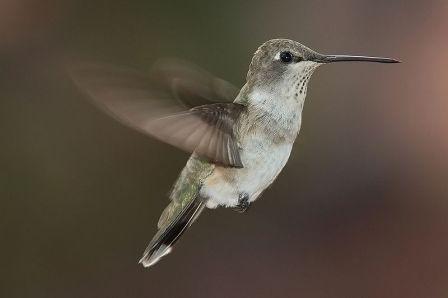
Black-chinned Hummingbird (female)

credit +
large image

Black-chinned Hummingbird

The Black-chinned Hummingbird (Archilochus alexandri) is a small hummingbird.

Their breeding habitat is open semi-arid areas near water in the western United States, northern Mexico and southern British Columbia.

The female builds a well-camouflaged nest in a protected location in a shrub or tree using plant fiber, spider webs and lichens.

Identification Tips:
• Length: 3 inches
• Long, straight, thin bill
• Small hummingbird
• Bright green back and crown
• White underparts with greenish flanks

Adult male:
• Iridescent purple gorget at lower throat
• Black face, chin, and upper throat
• Entirely dark tail

Female/Immature:
• White chin and throat with variable amounts of thin dark streaking
• Dark tail with white tips on outer tail feathers

Similar species:
Males unmistakable with a good view. Females are similar to a number of other female hummingbirds, and are best told from the Calliope Hummingbird and species in the genus Selasphorus by their lack of rufous on the flanks and in the tail. Anna’s Hummingbirds are larger and have grayer chests, while Costa’s Hummingbirds differ only in subtleties of facial pattern and tail pattern. Black-chinned Hummingbird females are not safely separable from female Ruby-throateds except in the hand. Best told from all species except Ruby-throated Hummingbird by call.

Black-chinned Hummingbirds are migratory and spend most of the winter in Mexico.

These birds feed on nectar from flowers using a long extendable tongue or catch insects on the wing. While collecting nectar, they also assist in plant pollination.

Because of their small size, Black-chinned Hummingbirds are vulnerable to insect-eating birds and animals. This bird is fairly common in its breeding range.


Like the hummingbird sipping nectar from every flower, I fly joyfully through my days, seeing beauty in everything.

Quotation by Amethyst Wyldfyre


Bird Quotation Popularity Poll

(4 answers max)

  • Quotation: Like the hummingbird sipping nectar...

    View Results

    Loading ... Loading ...

Add any comments below and/or indicate if you spotted this bird.


Like the hummingbird sipping nectar from every flower, I fly joyfully through my days, seeing beauty in everything.

Bird Quote Notice
Please submit bird quotes, or your own bird quote. Fill out the Submit form on the menu to submit.


reports


Related Blogs

Read More

A Fly can’t bird, but a bird can fly

beautiful thoughts


A Fly can’t bird, but a bird can fly.

An A A Milne Quotation

Trumpeter Swan: Have you seen this bird?

Trumpeter Swan: Have you seen this bird?


Large view

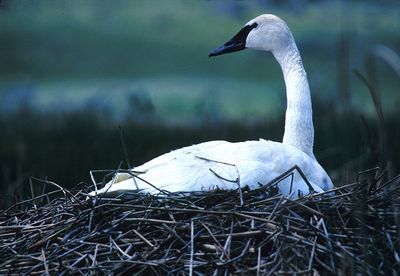
Trumpeter Swan

The Trumpeter Swan, Cygnus buccinator, is the largest native North American bird. If measured in terms of weight and length, then it is (on average) the largest living waterfowl species on earth.

Their breeding habitat is large shallow ponds and wide slow rivers in northwestern and central North America, with the largest numbers of breeding pairs found in Alaska.

Identification Tips:
• Length: 45 inches Wingspan: 95 inches
• Large, long-necked waterbird with short legs and a short duck-like bill
• Long neck held straight up with a kink at base

Adult:
• Black bill
• Culmen straight
• Black of bill extends up to eye but does not encircle it
• V shaped demarcation on forehead between black bill and white feathering
• Black legs and feet
• Entirely white plumage
• Sexes similar

Similar species:
The very large Trumpeter Swan is unlikely to be confused with anything but other swans. White Pelicans, Whooping Cranes, Wood Storks, and Snow Geese are all white birds that from a great distance could look like swans but all have black primaries. The adult Mute Swan can be told from the adult Trumpeter Swan by its orange and black knobby bill.

These swans feed while swimming. Sometimes they end up up-ending or dabbling to reach submerged food. The Trumpeter Swans’ diet is almost entirely aquatic plants. In winter, they may also eat grasses and grains in fields.

The young are fed on insects and small crustaceans along with plants at first, changing to a vegetation-based diet over the first few months.

The female lays 3-10 eggs on average in a mound of plant material on a small island, a beaver or muskrat lodge, or a floating platform. The same location may be used for several years.

Natural populations of these swans migrate to and from the Pacific coast and portions of the United States, flying in V-shaped flocks. Released populations are mostly non-migratory.


A Fly can’t bird, but a bird can fly. An A A Milne Quotation


Bird Quotation Popularity Poll

(4 answers max)

  • Quotation: A Fly can't bird, but a bird can fly

    View Results

    Loading ... Loading ...

Add any comments below and/or indicate if you spotted this bird.


A Fly can’t bird, but a bird can fly.

Bird Quote Notice
Please submit bird quotes, or your own bird quote. Enter the bird quote for others to enjoy by filling out the Submit form on the menu.


reports


Related Blogs

Read More

Don’t fly till your wings are feathered

Don’t fly till your wings are feathered.

A German Proverb

Green-winged Teal

Green-winged Teal: Have you seen this bird?

Large view +
credit

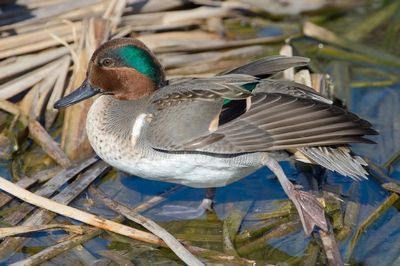
Green-winged Teal

The Green-winged Teal (GWT, Anas carolinensis) is a common and widespread duck which breeds in the northern areas of North America except on the Aleutian Islands.

This dabbling duck is strongly migratory and winters far south of its breeding range. It is highly gregarious outside of the breeding season and will form large flocks. In flight, the fast, twisting flocks resemble waders.

Identification Tips:
• Length: 10.5 inches Wingspan: 24 inches
• Very small, short-necked, and small-billed dabbling duck
• Green speculum
• Whitish belly
• Juvenile similar to adult female

Adult male alternate:
• Alternate plumage worn from Fall through early summer
• Dark bill
• Rich rust-colored head
• Iridescent green face patch sweeping through eye and tapering to the back of head
• Buff chest with dark spotting
• Gray flanks and back
• Vertical white line at fore part of flanks
• Horizontal black line above flanks
• Buff outer undertail coverts bordered by black
• Black central undertail coverts

Adult male basic:
• Similar to adult female, but with duller face pattern

Adult female:
• Dark gray bill
• Pale brown head and neck
• Dark brown cap and eye line
• Dark brown back and upperwing coverts scalloped with buff
• White breast spotted with brown
• White belly

Similar species:
Adult male unmistakable in winter. Females, immature and eclipse males similar to most female ducks, but are very small, short-billed, and have a distinctive wing pattern that is sometimes visible at rest.

The Green-winged Teal is the smallest North American dabbling duck.

It is a common duck of sheltered wetlands, such as taiga bogs. The Green-winged Teal usually feeds by dabbling for plant food or grazing. It nests on the ground, near water and under cover.


Don’t fly till your wings are feathered.

A German Proverb


Bird Quotation Popularity Poll

(4 answers max)

  • Quote: Don't fly till your wings are feathered

    View Results

    Loading ... Loading ...

Add any comments below and/or indicate if you spotted this bird.


Don’t fly till your wings are feathered.

Bird Quote Notice
Please submit bird quotes, or your own bird quote. Enter the bird quote for others to enjoy by filling out the Submit form on the menu.


reports

Read More

Let the Bird Sing, Let the Bird Fly


subliminal

Let the Bird Sing, Let the Bird Fly

Bird talk – but not about birds!
From an article posted Jan (2008)

bird

?

Name this bird and have you seen this bird?

Let the Bird Sing, Let the Bird Fly is the title of a long article about Bob Dylan.

Let the Bird Sing, Let the Bird Fly

Variations:

Enter any comments below and/or name the bird.


turbomembership


Read More

Tweeter button Facebook button Technorati button Reddit button Myspace button Linkedin button Webonews button Delicious button Digg button Stumbleupon button Newsvine button

Bad Behavior has blocked 360 access attempts in the last 7 days.