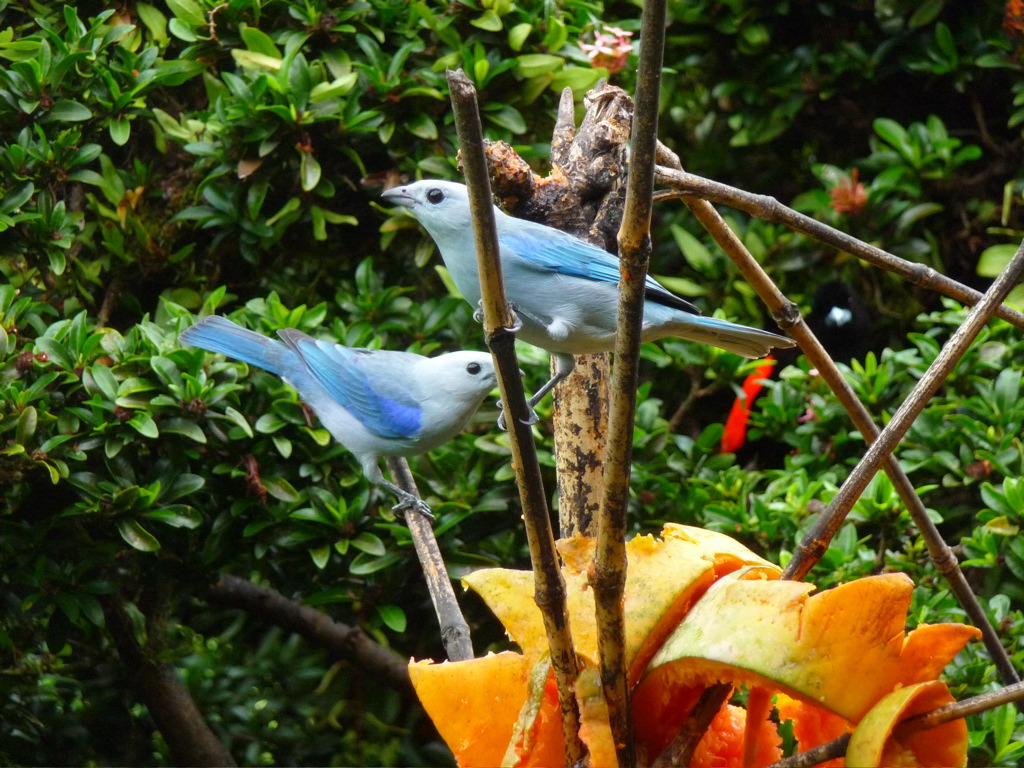
A bird in the hand does it on your wrist

A bird in the hand does it on your wrist.

Graffiti at Bury St. Edmunds

Wood Duck: Have you seen this duck?

Wood Duck: Have you seen this duck?

Large view +
credit

Wood Duck or Carolina Duck (Aix sponsa)

The Wood Duck or Carolina Duck (Aix sponsa) is a medium-sized perching duck. It shares its genus with the Asian Mandarin Duck.

Their breeding habitat is wooded swamps, shallow lakes, marshes or ponds in eastern North America, the west coast of the United States and western Mexico.

Identification Tips:
• Length: 13.5 inches Wingspan: 28 inches
• A medium-sized duck with a long crest on head
• Long-winged and long-tailed
• Blue-green speculum with white rear border

Adult male alternate:
• Alternate plumage worn from Fall-through early summer
• Red bill
• Red eye
• Green head
• Striking white stripes about face and crest with a large white throat patch and “fingerlike” extensions onto cheek and neck
• Chestnut breast and neck with vertical white stripe at lower margin
• Golden flanks bordered above by a white flank stripe
• White belly
• Iridescent dark green-blue back and wings

Adult male basic:
• In basic plumage, the male resembles the female, but often retains the distinctive neck patch and red bill

Adult female:
• Gray bill
• White teardrop shaped patch around eye
• White throat
• Gray-brown head and neck
• Gray-brown breast stippled with white and fading to a white belly
• Dark brown back

Similar species:
Adult male is unmistakable. Female, immature and eclipse males are nondescript, but distinctive in face pattern, shape and speculum pattern.

Wood Ducks usually nest in cavities in trees close to water, although they will take advantage of nesting boxes in wetland locations if available. The ducks’ personality is shy and skittish.

The birds are year-round residents in East Texas and other southern parts of their range, but the northern populations migrate south for the winter. They overwinter in the southern United States near the Atlantic coast.

These birds feed by dabbling or walking on land. They mainly eat berries and seeds, but also insects, making them omnivores.


A bird in the hand does it on your wrist.

Graffiti at Bury St. Edmunds


Bird Quotation Popularity Poll

(4 answers max)

  • Quote: A bird in the hand does it on your wrist

    View Results

    Loading ... Loading ...

Add any comments below and/or indicate if you spotted this bird.


A bird in the hand does it on your wrist.

Bird Quote Notice
Please submit bird quotes, or your own bird quote. Enter the bird quote for others to enjoy by filling out the Submit form on the menu.


reports

Read More

He is a fool who lets slip a bird…
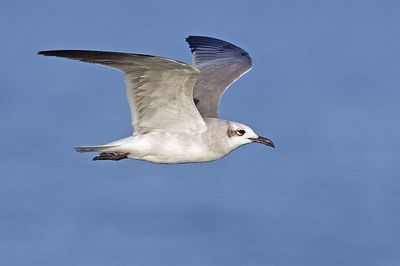
He is a fool who lets slip a bird in the hand for a bird in the bush.

A Plutarch quotation (c. 46 – c. 120), Greek biographer, essayist, philosopher…

Laughing Gull

Have you seen this bird?

The Laughing Gull species is easy to identify. The summer adult’s body is white apart from the dark grey back and wings and black head. Its wings are much darker grey than all other gulls of similar size except the smaller Franklin’s Gull, and they have black tips without the white crescent shown by Franklin’s.

Identification Tips:
• Length: 13 inches Wingspan: 41 inches
• Medium-sized, long-winged gull
• Long red bill somewhat droopy towards tip
• Head flat at forehead, giving “mean” look
• Adult plumage reached in third year

Adult alternate:
• Red bill, black head, white tail
• Thin white crescents above and below eye
• White neck, breast, and belly
• Dark gray back and upperwings
• Pale scapular crescent and tertial crescent
• Dark primaries, usually with no white tips
• Dark primaries blend into gray of upperwings without white division

Adult basic:
• Black bill, white tail
• White head with faint black streaking on rear part of head
• Dark primaries, usually with small white tips

The Laughing Gull, Leucophaeus atricilla, is a medium-sized gull of the Americas. It breeds on the Atlantic coast of North America, the Caribbean, and northern South America. Northernmost populations migrate further south in winter, and this species occurs as a rare vagrant to western Europe.

Laughing Gulls breed in coastal marshes and ponds in large colonies. The large nest, made largely from grasses, is constructed on the ground. Their 3 or 4 greenish eggs are incubated for about three weeks. These are omnivores like most gulls, and they will scavenge as well as seek suitable small prey.


He is a fool who lets slip a bird in the hand for a bird in the bush.

By Plutarch (c. 46 – c. 120), Greek biographer, essayist, etc…


Bird Quotation Popularity Poll

(4 answers max)

  • Quotation: He is a fool who lets slip a bird...

    View Results

    Loading ... Loading ...

Add any comments below and/or indicate if/where you’ve seen the bird.


Large view +
license


Related Blogs

Read More

A bird in hand is worth two in the bush


subliminal

A bird in hand is worth two in the bush

A popular quote

bird

#

Name this bird

A bird in hand is worth two in the bush

Variations:

Bird Quote Popularity Poll

(4 answers max)

  • Quote: A bird in hand is worth two in the bush

    View Results

    Loading ... Loading ...

Comment below how you use this popular quote and/or name the bird.


Read More

Bad Behavior has blocked 354 access attempts in the last 7 days.